Completion of the first phase of the reconstruction of the organ at the American Cathedral

21 octobre 2026

At the end of August, we completed the first half of the reconstruction of the Cavaillé-Coll organ at the American Cathedral in Paris.
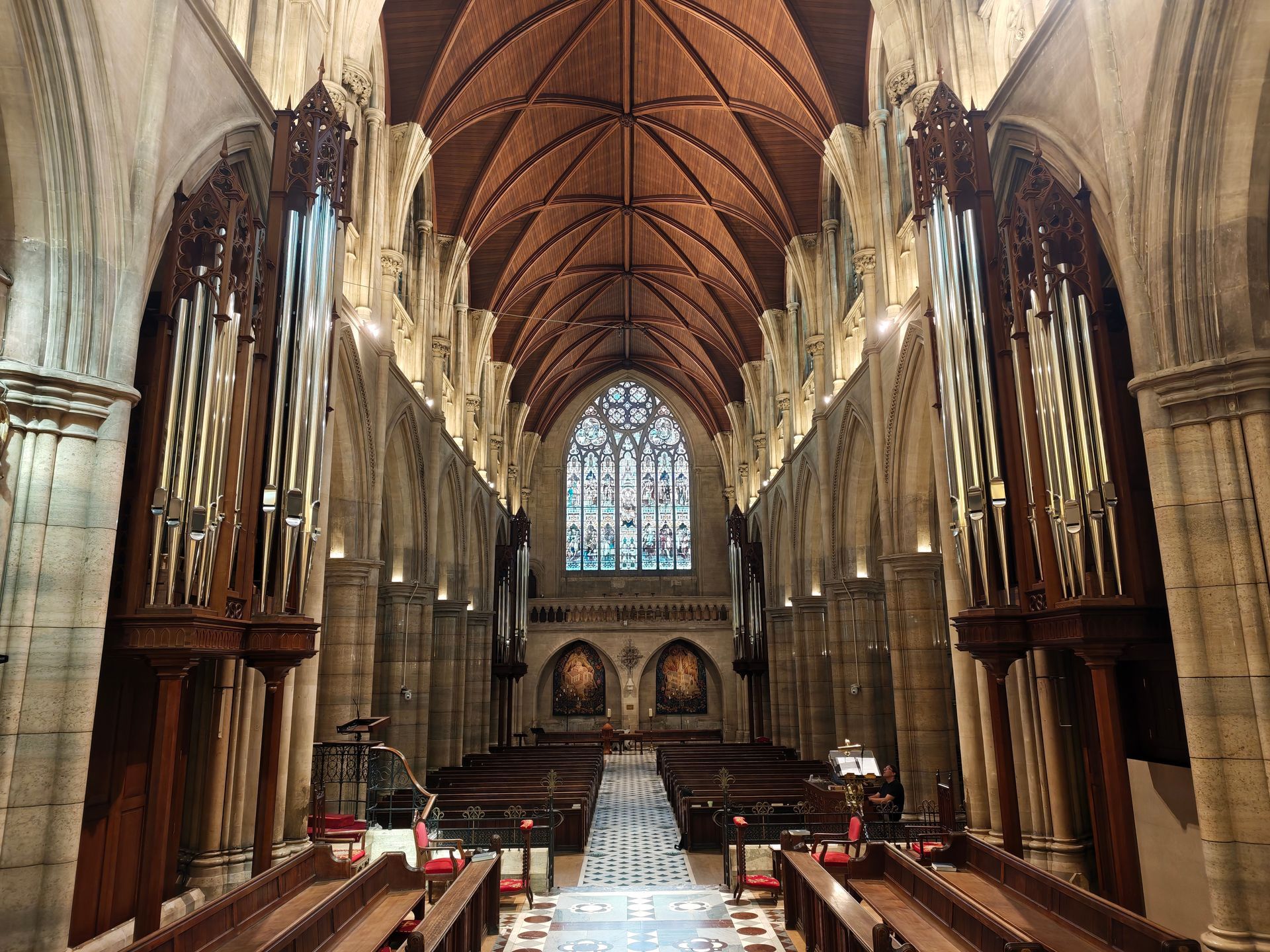
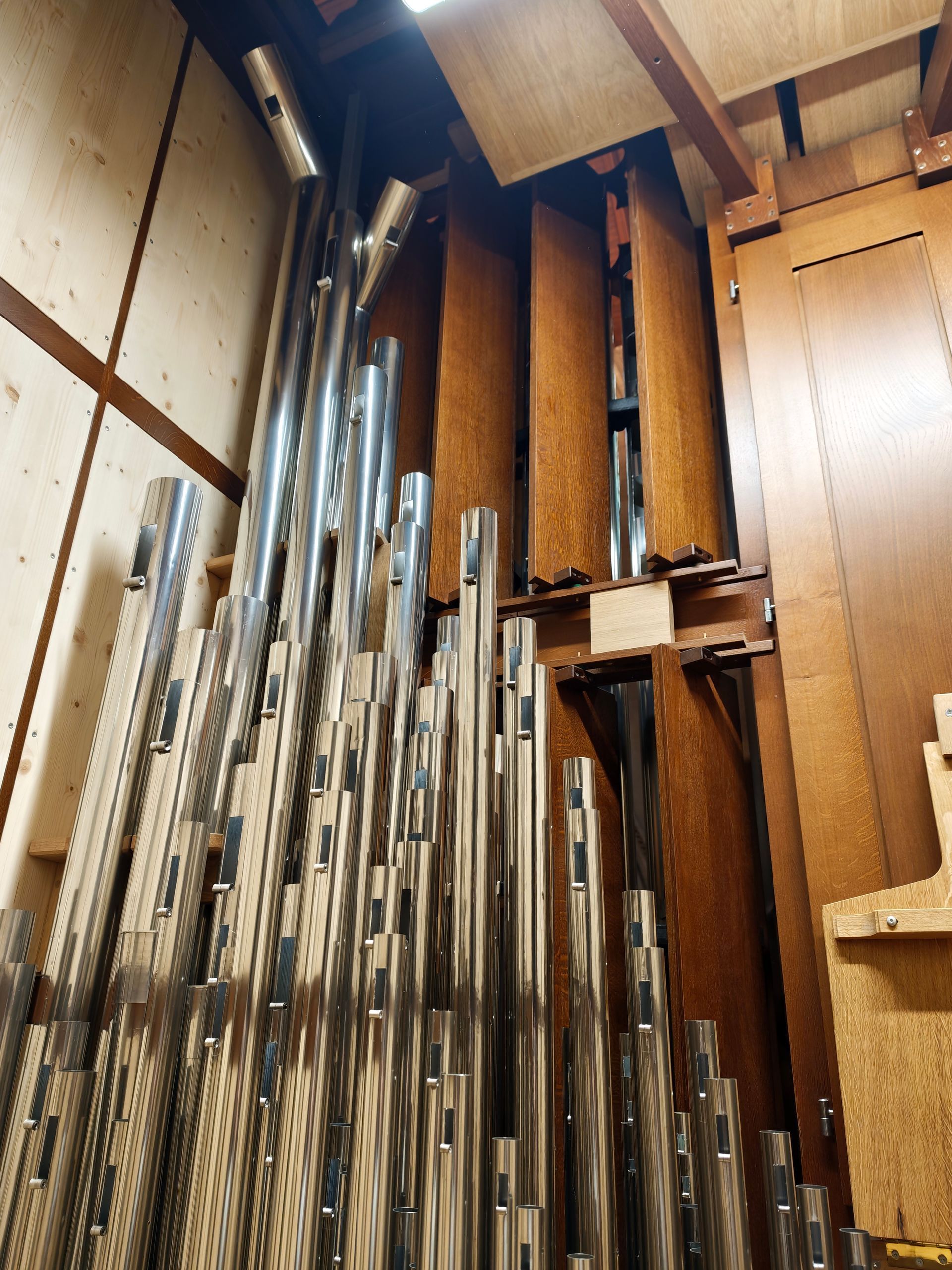
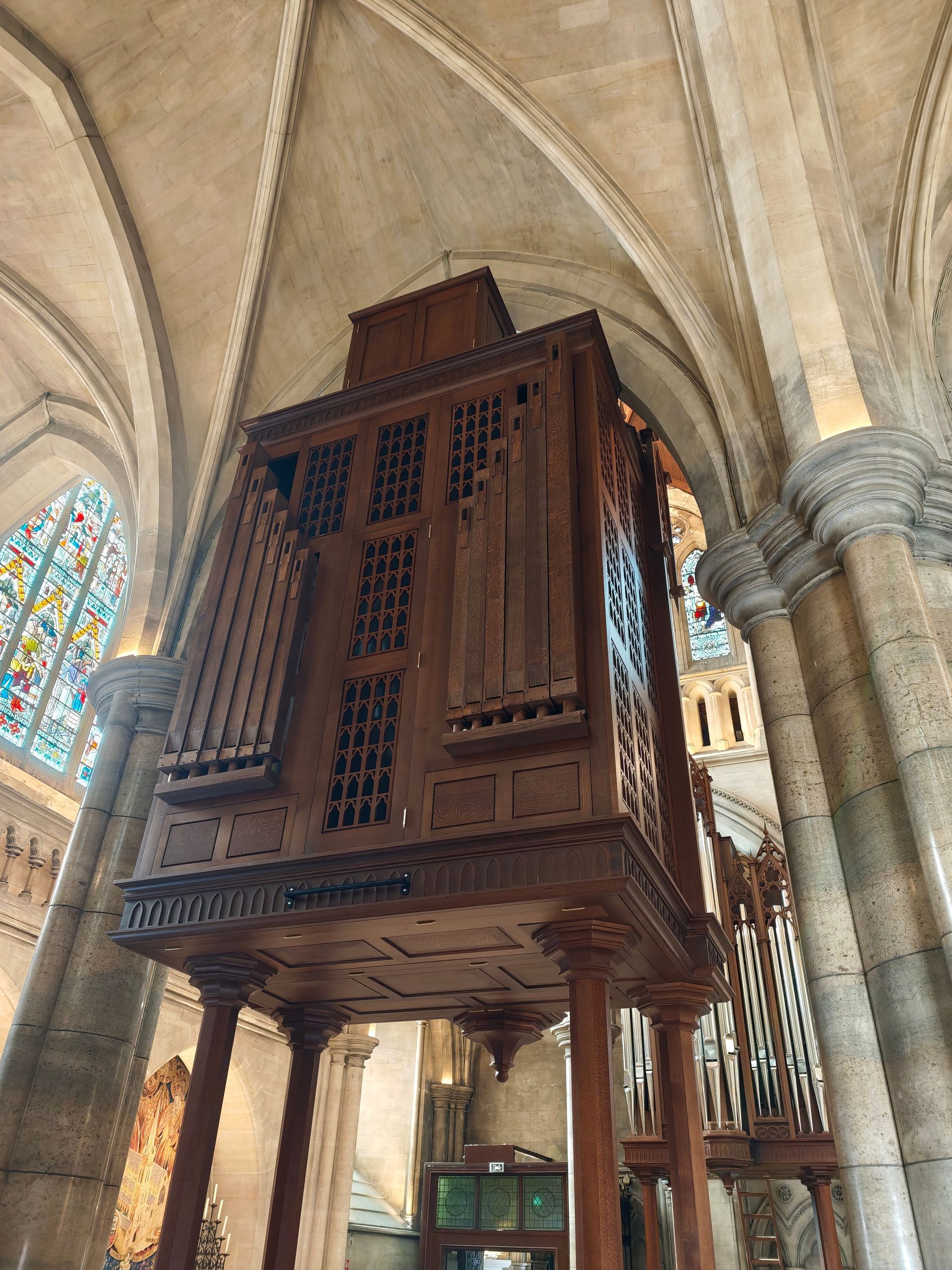
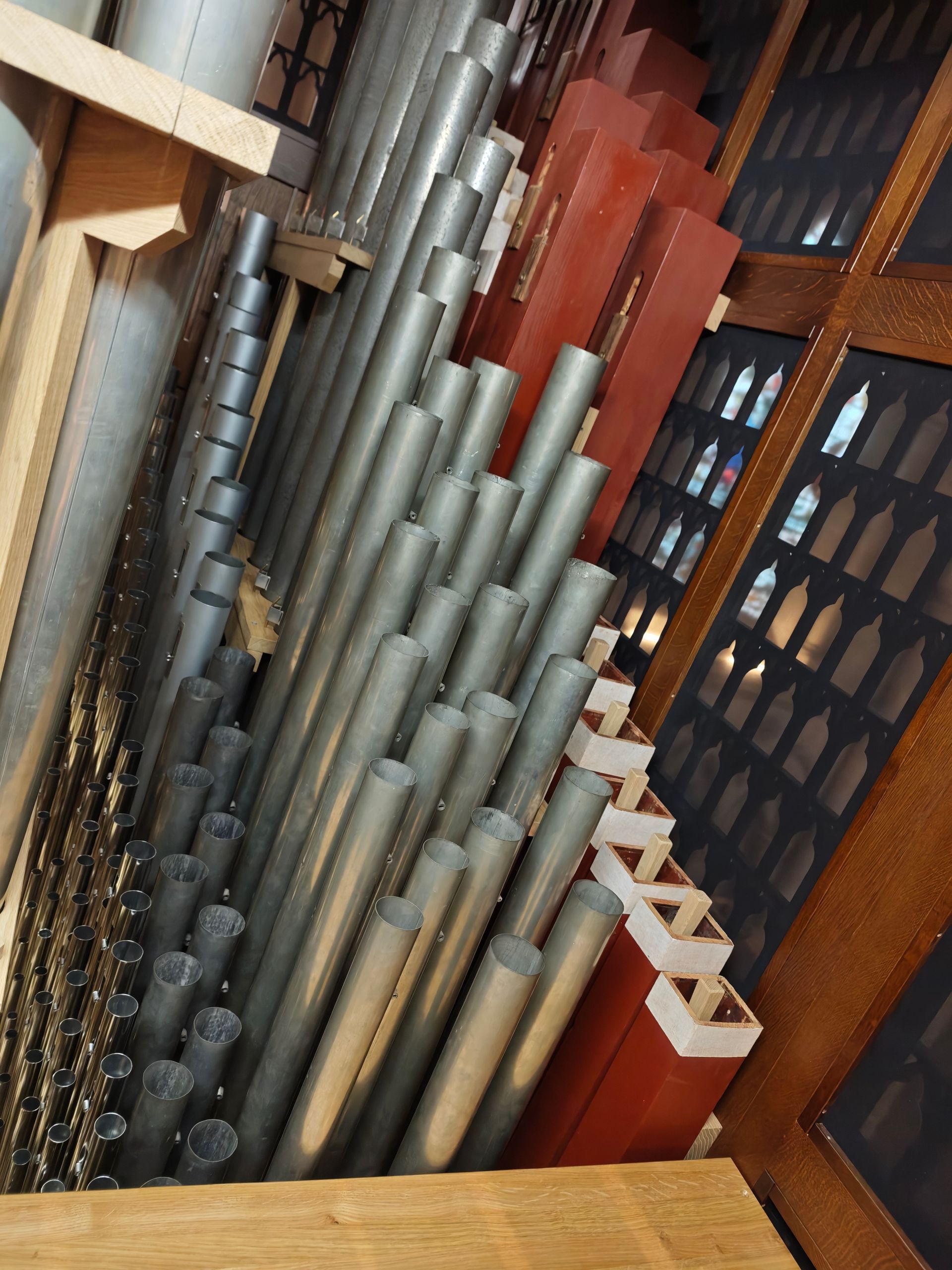
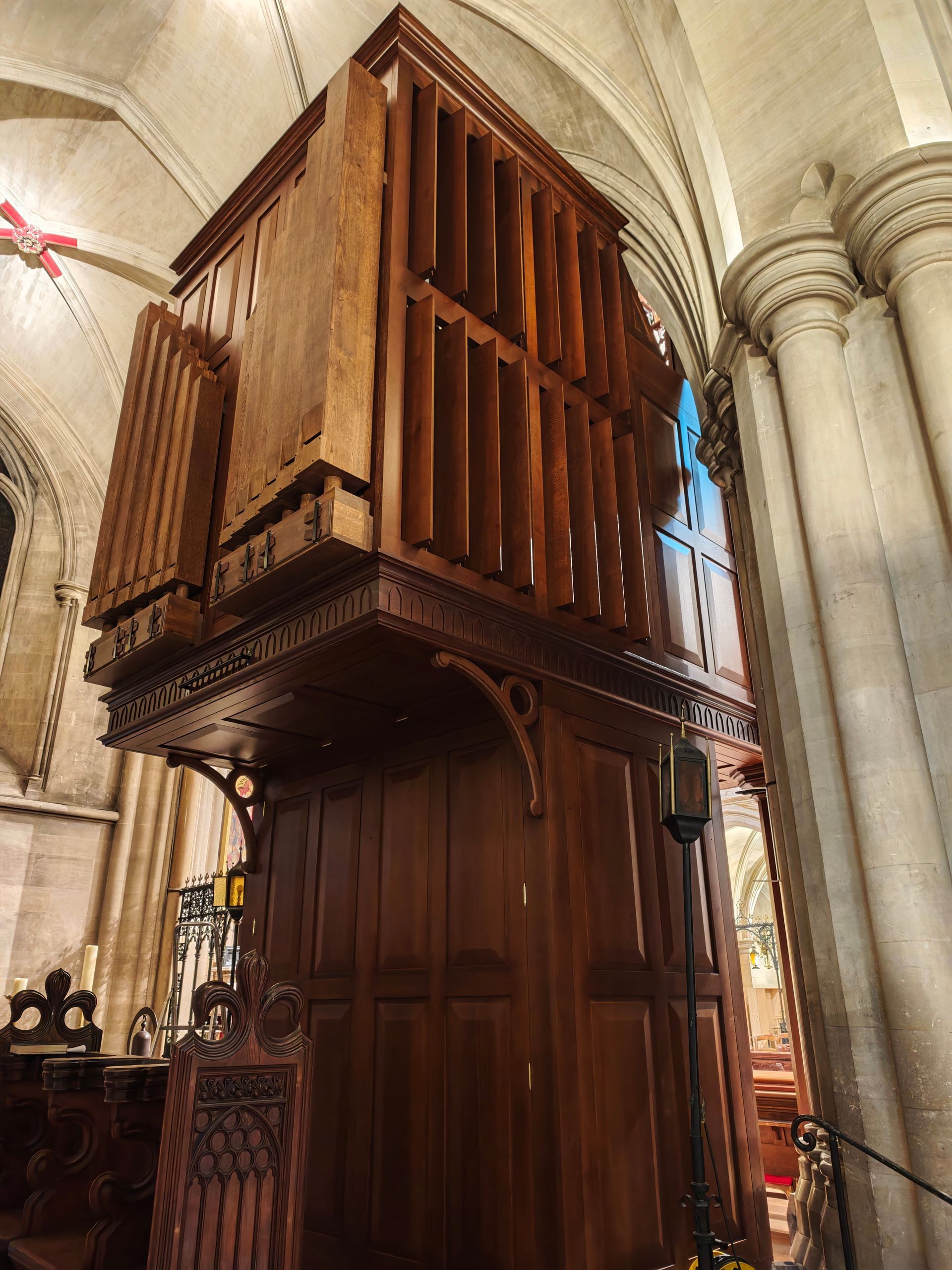
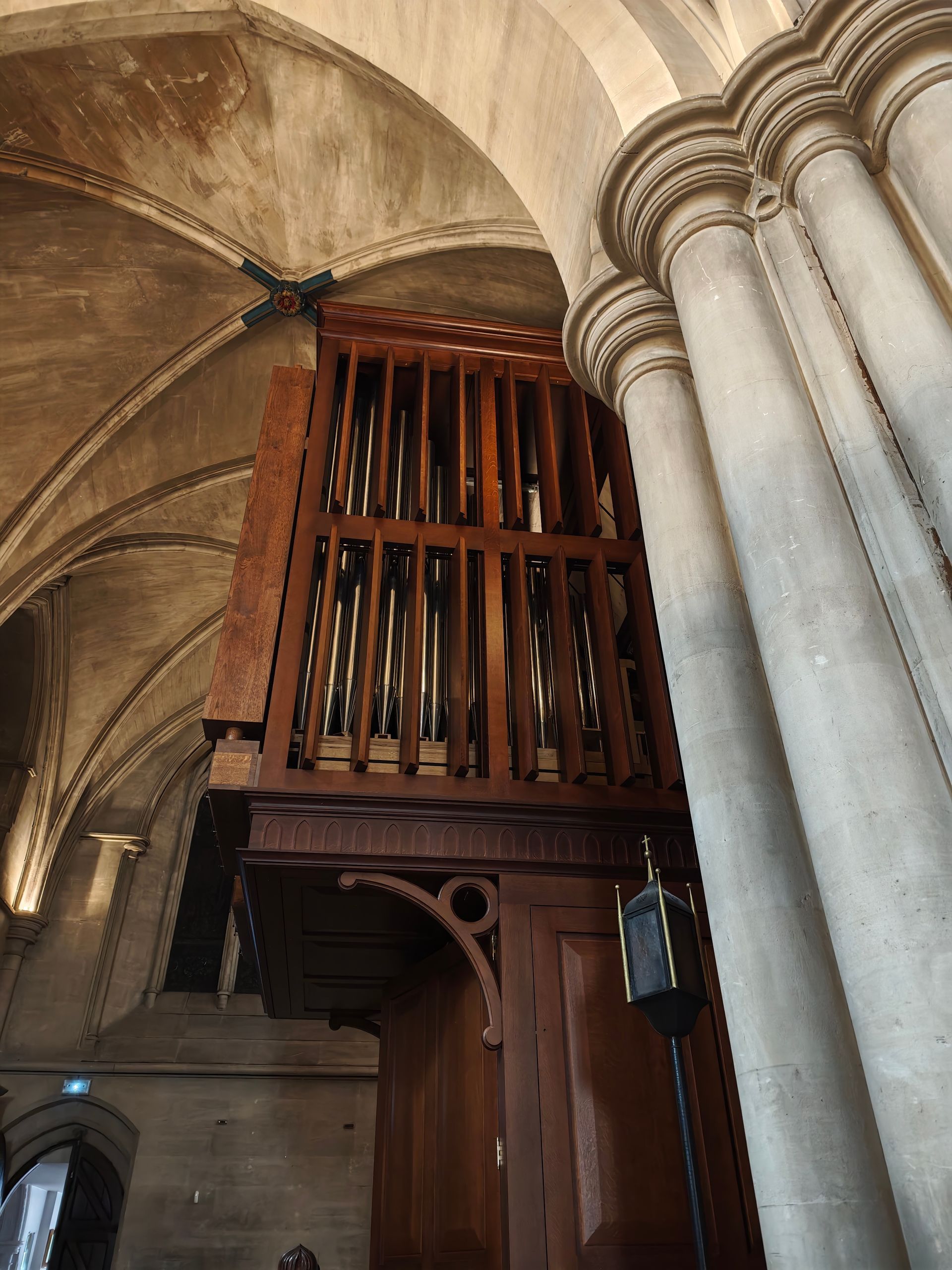
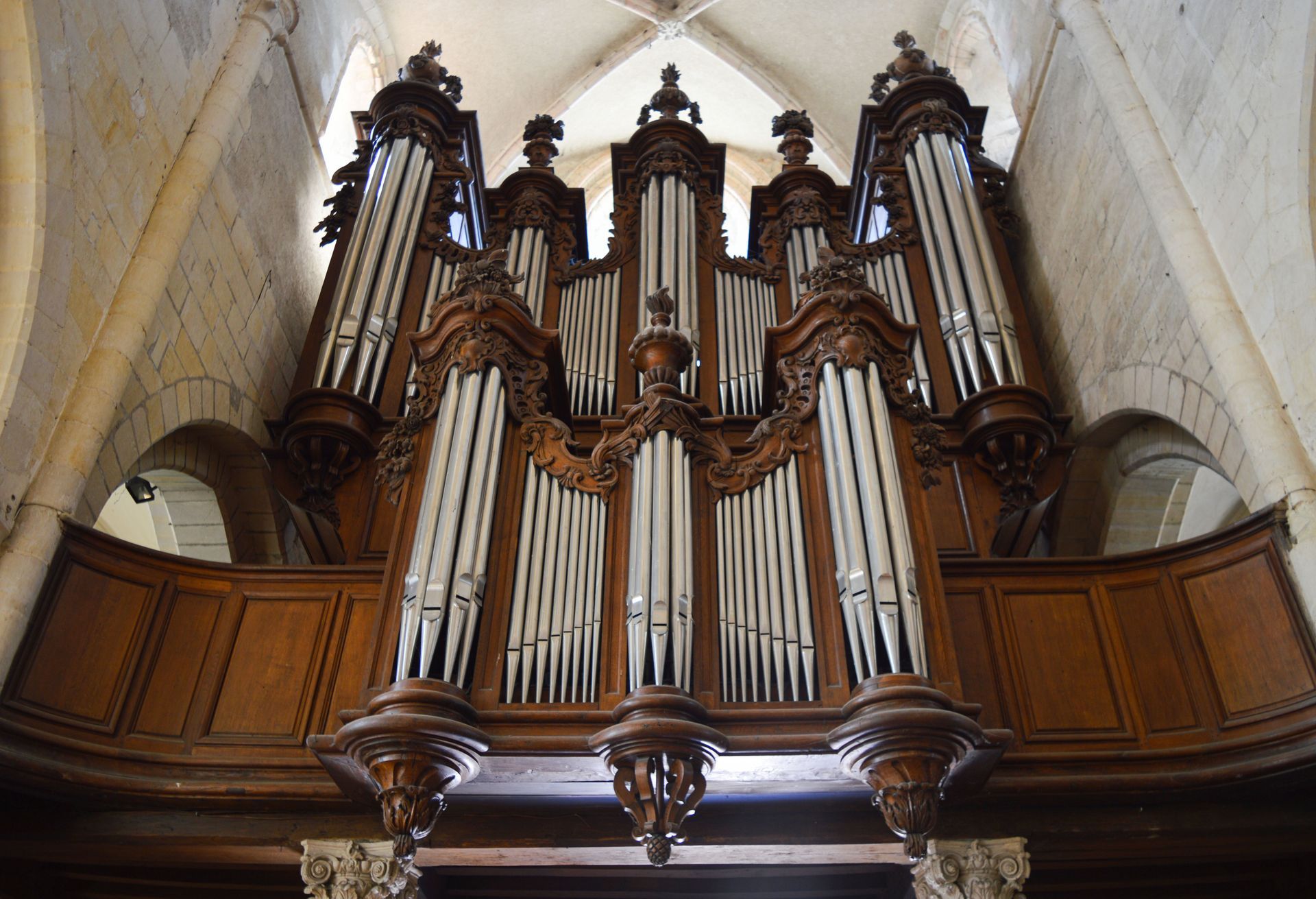
The ‘Nave’ division of the organ, comprising the two cases on stilts at the rear of the nave as well as the pipes situated beneath the large stained-glass window, was installed in February and voiced in March (with the exception of the Récit reeds and the Chamade, which will be installed during the second phase).
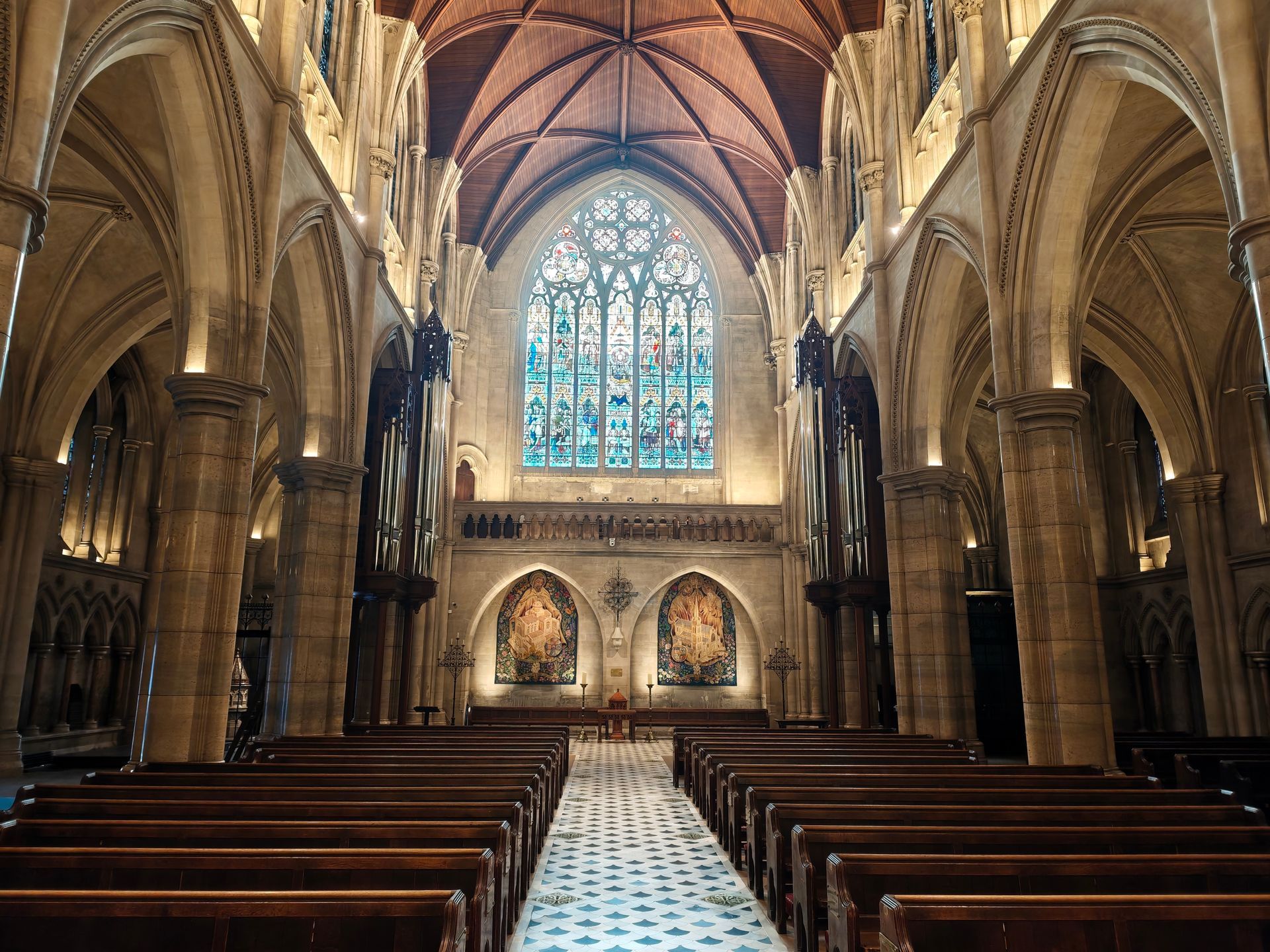
Andrew Dewar, titulaire, playing various pieces of the repertoire on the Nave Division upon its completion (without the reeds)
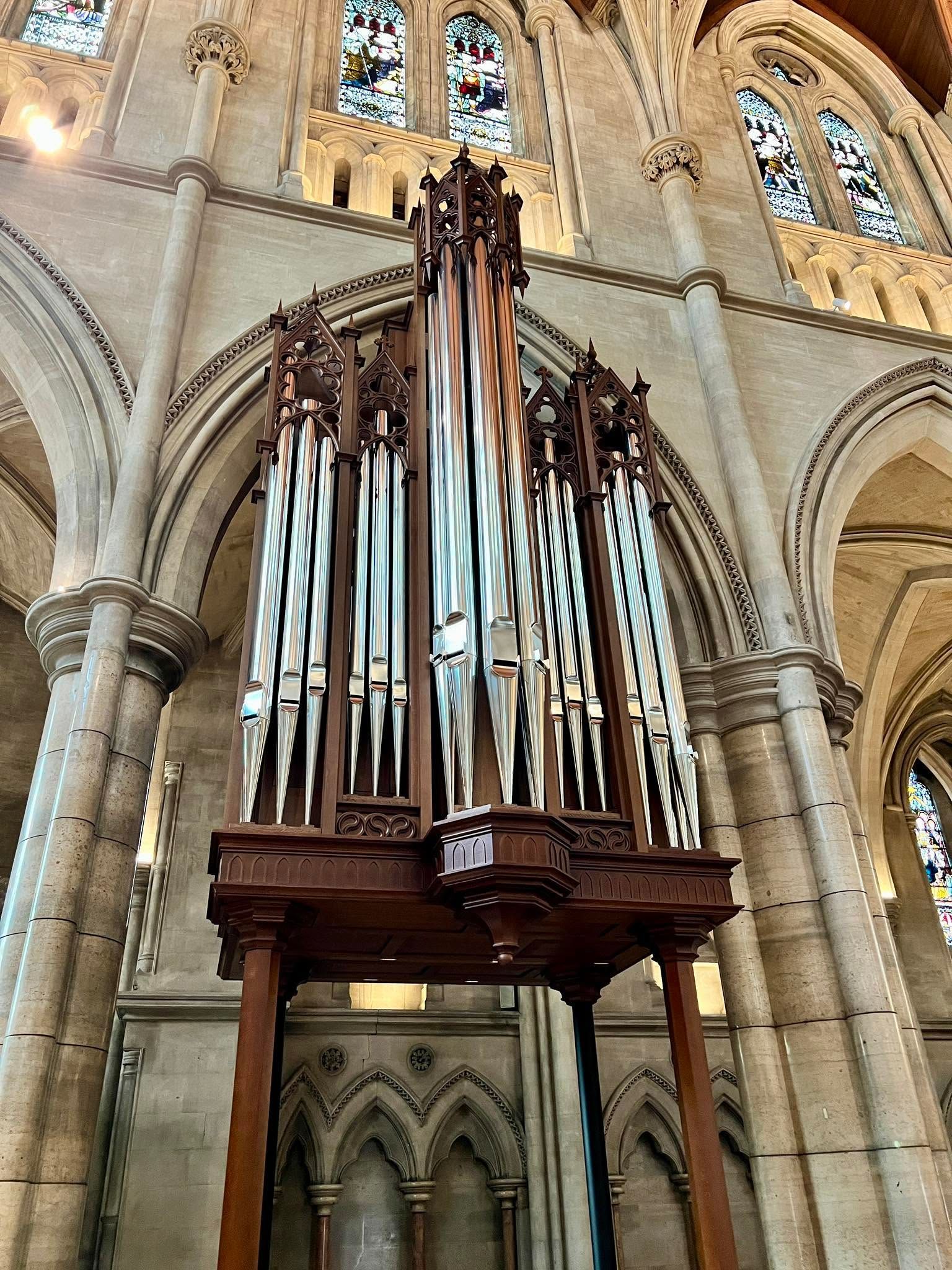
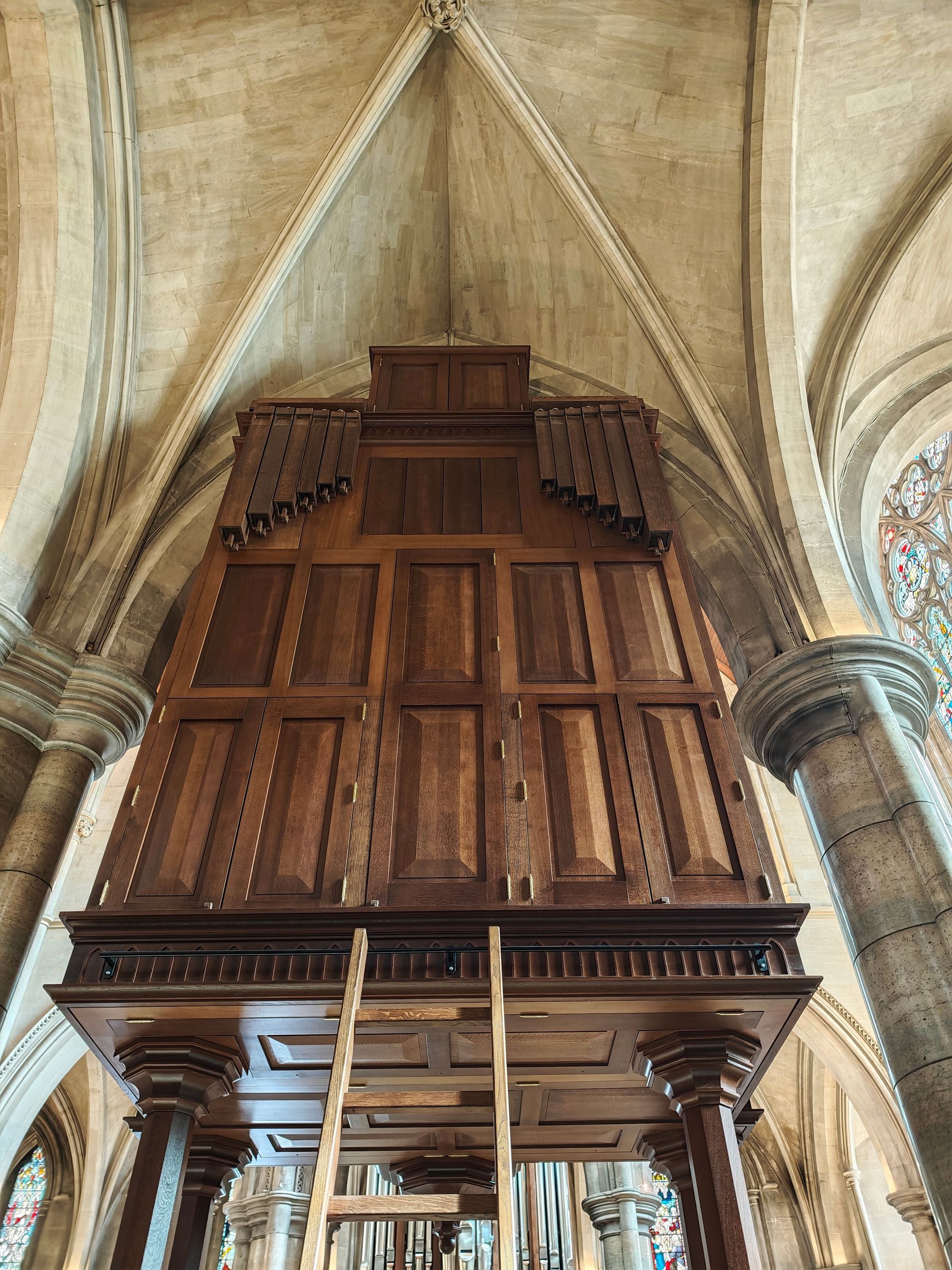
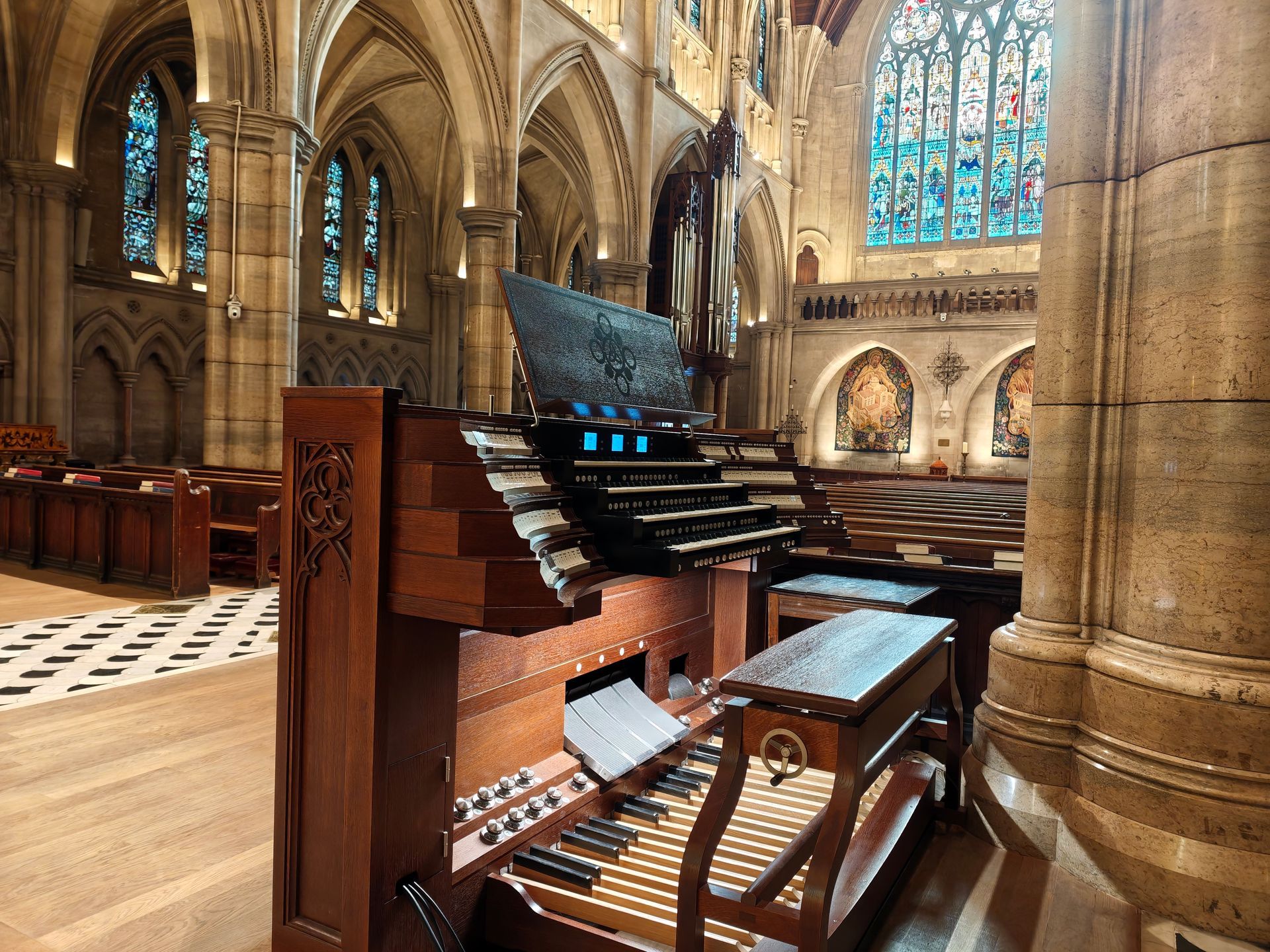
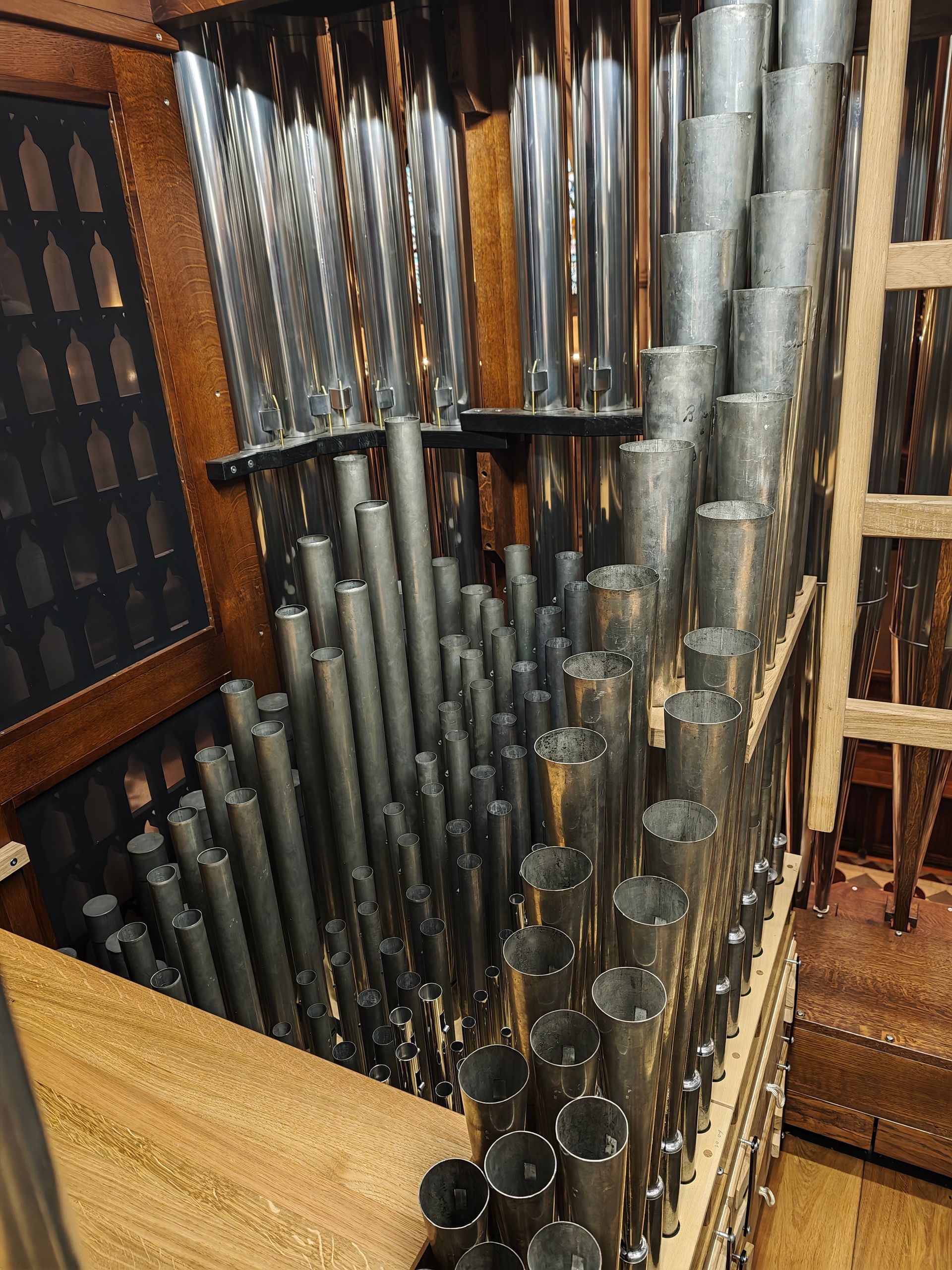
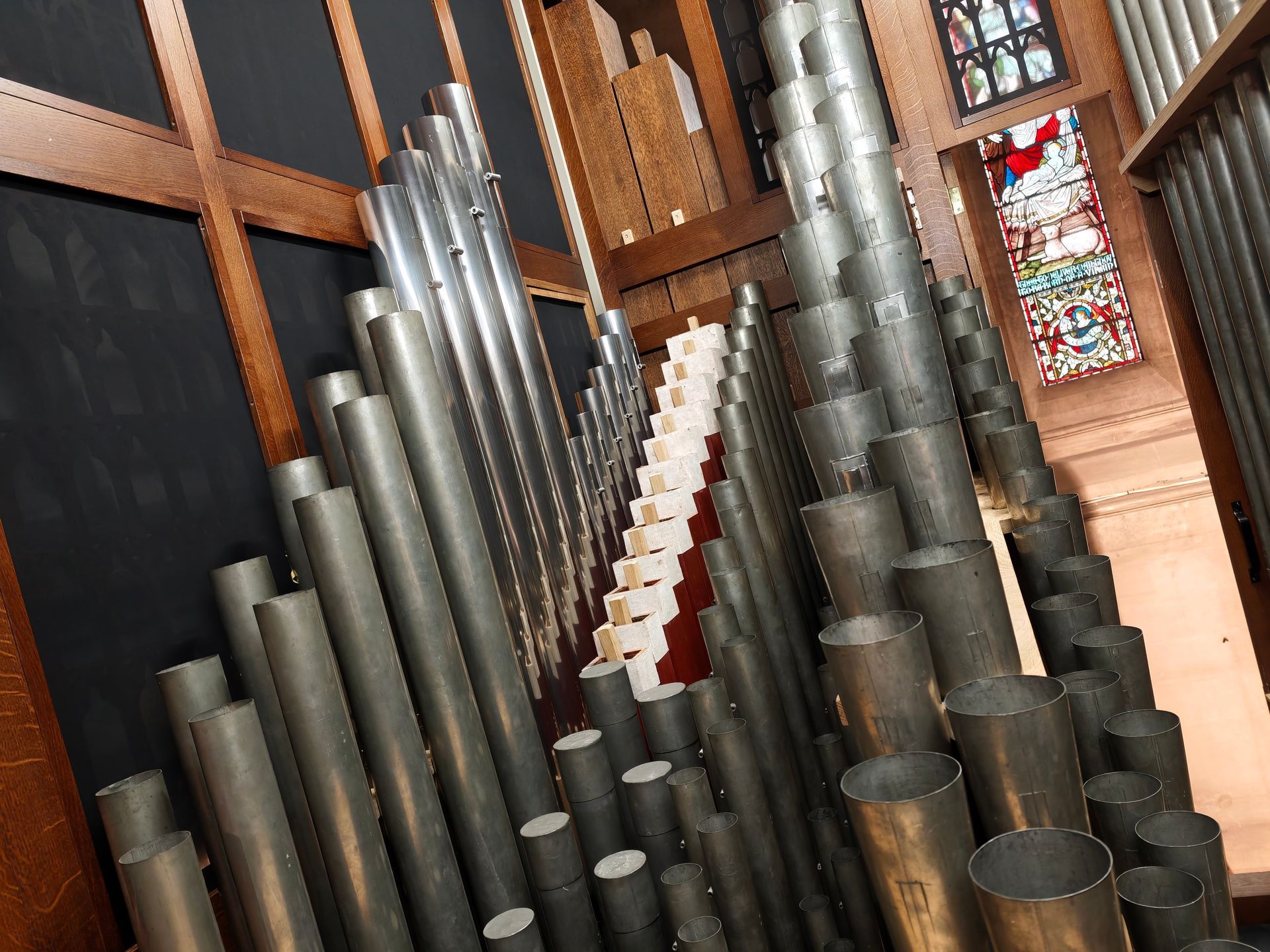
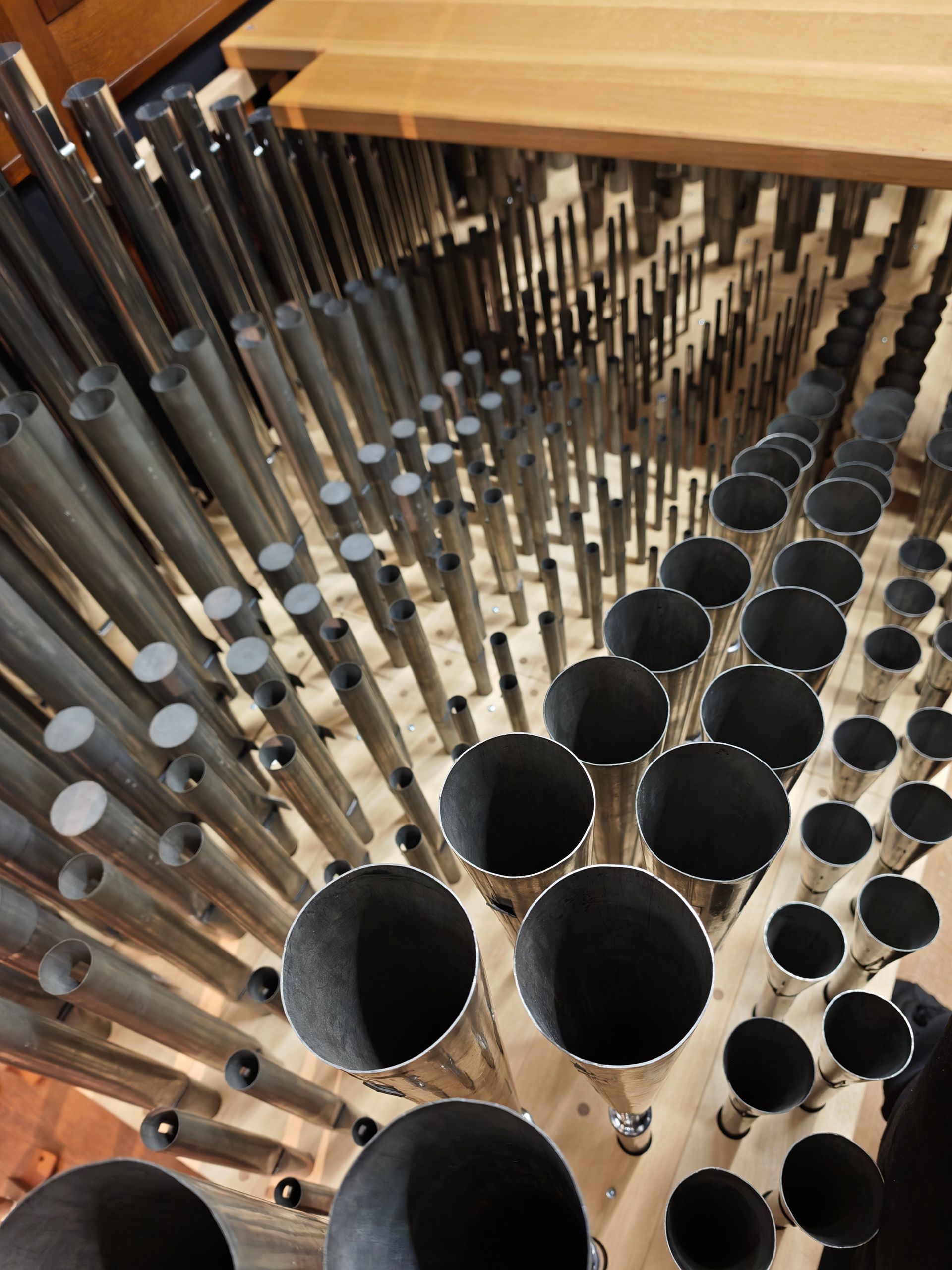
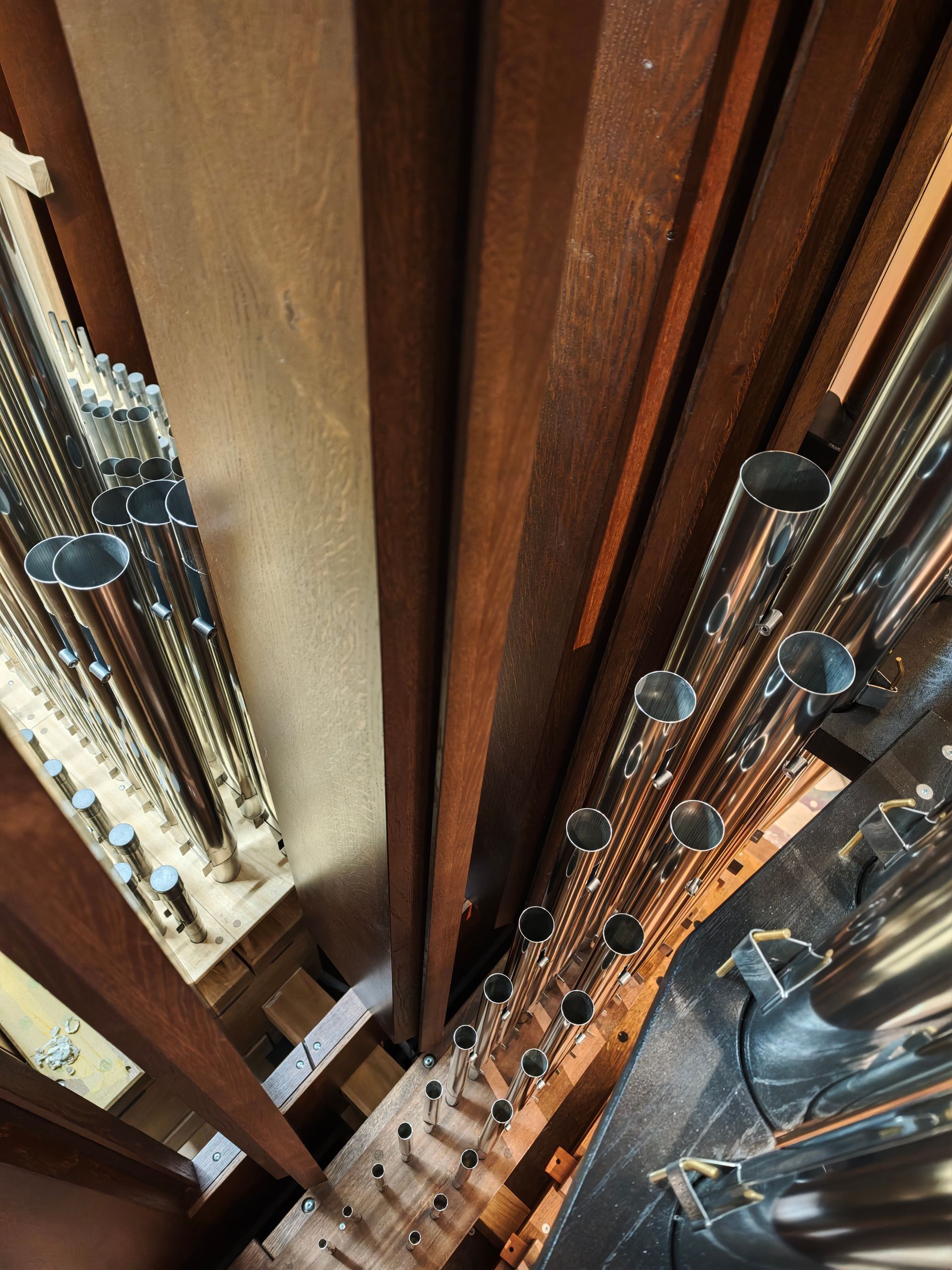
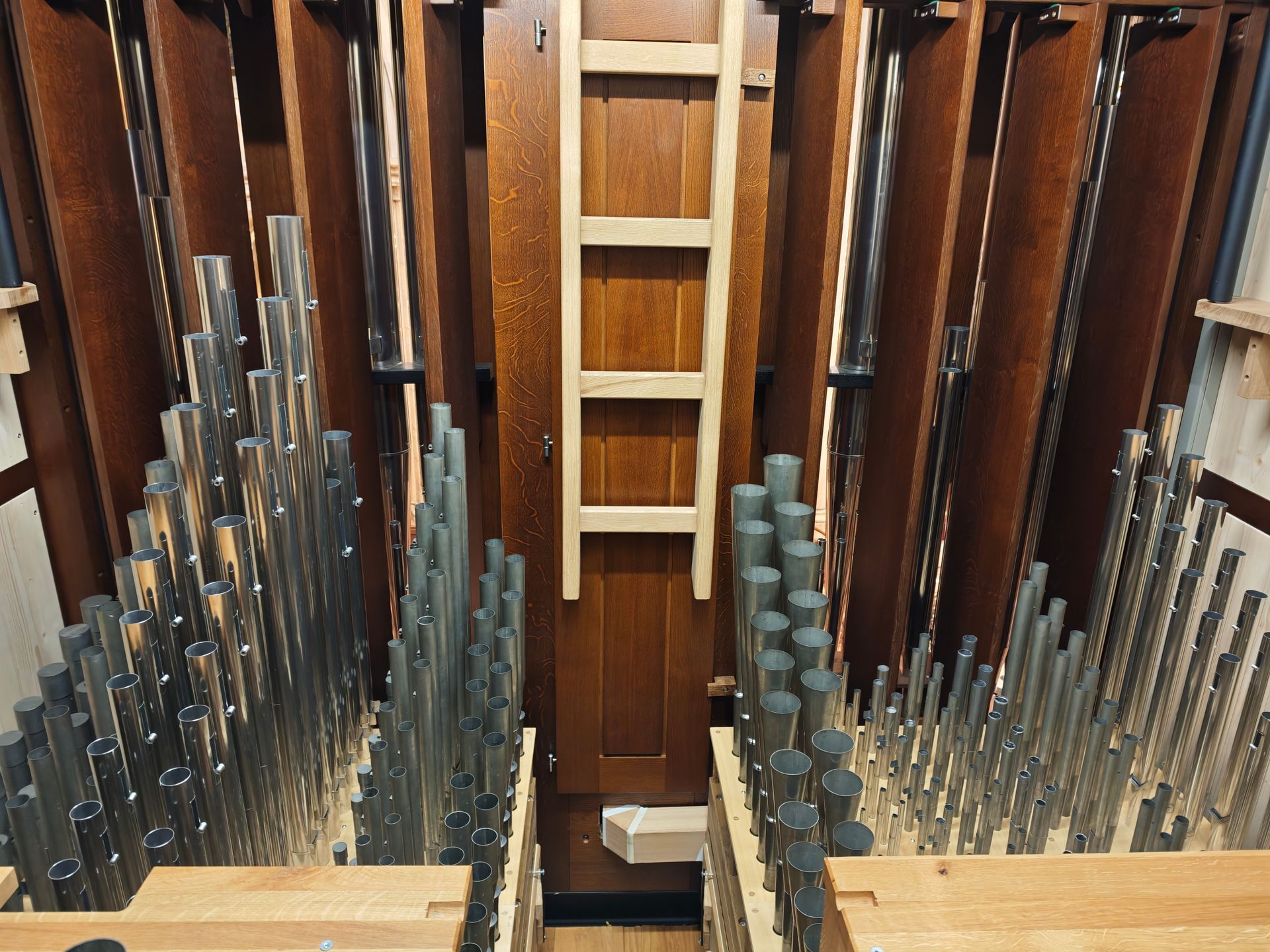
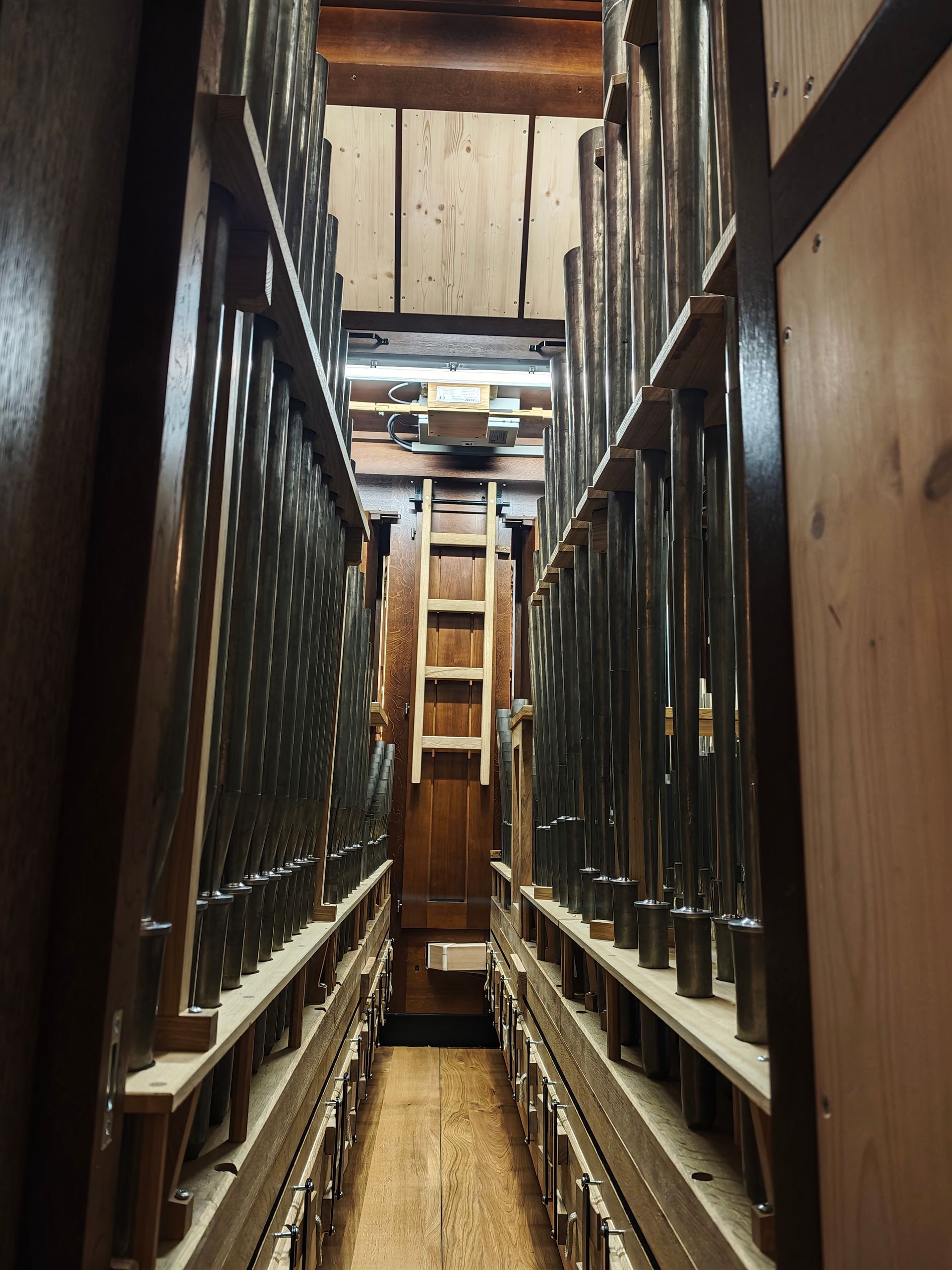
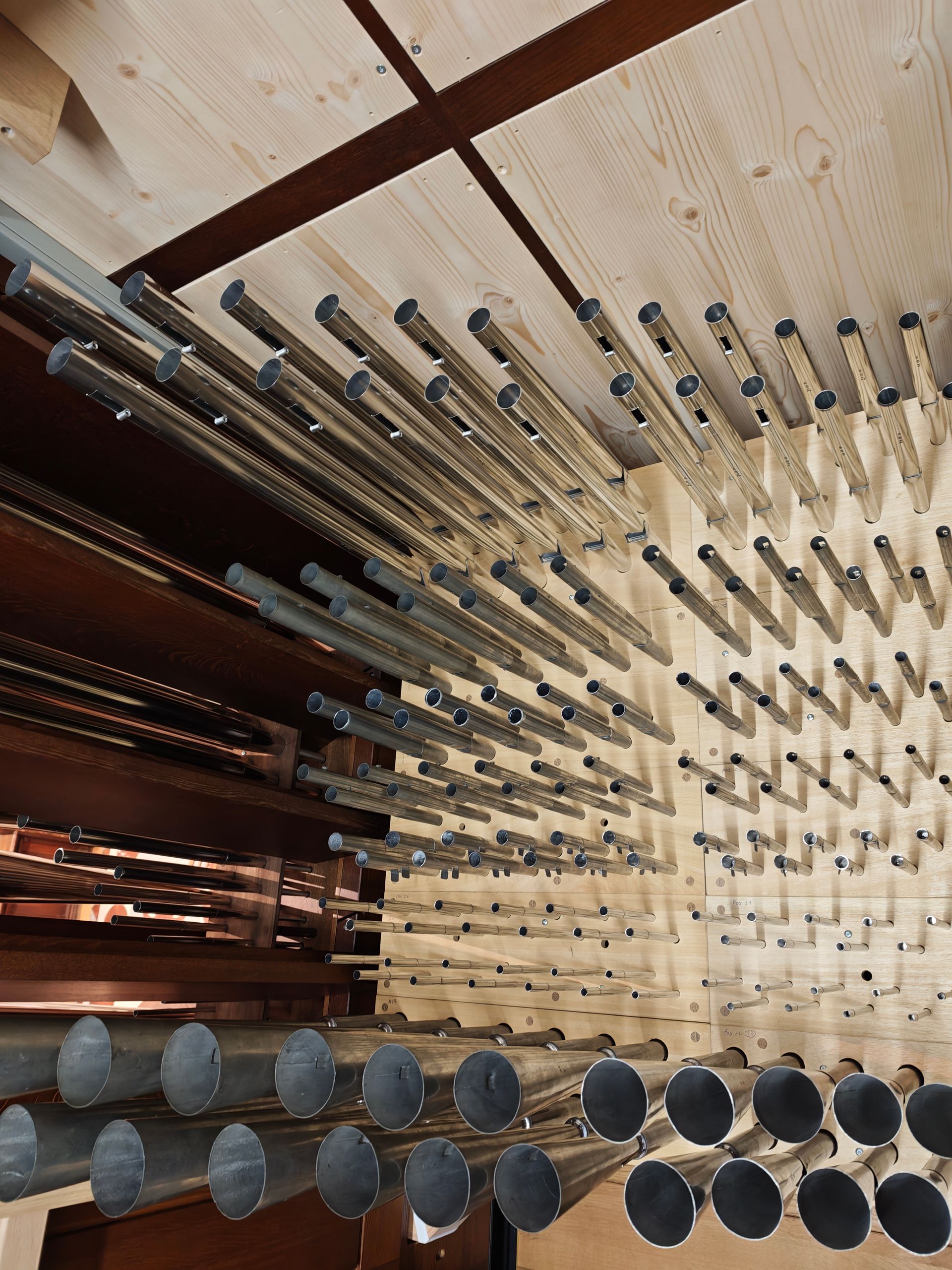
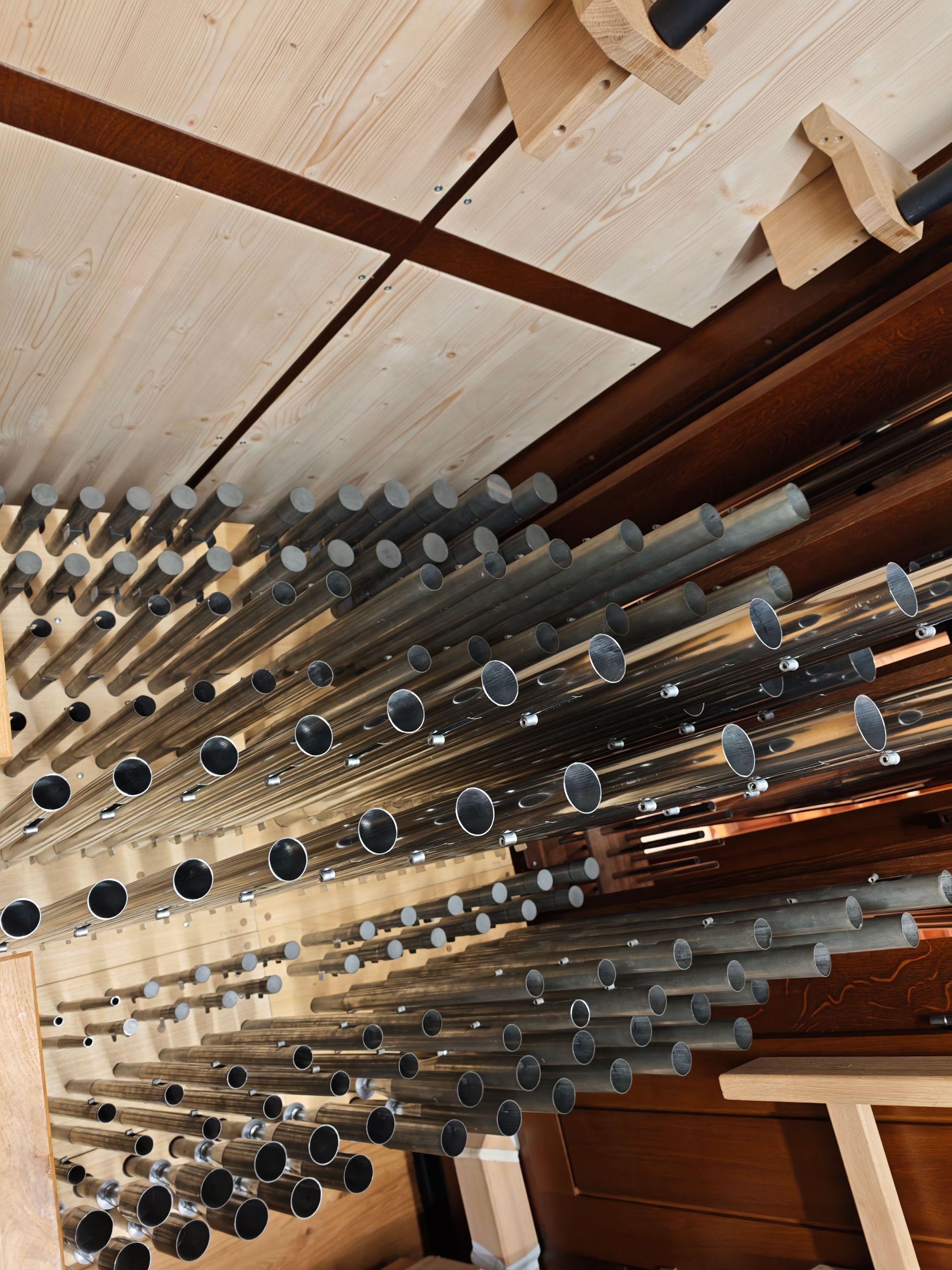
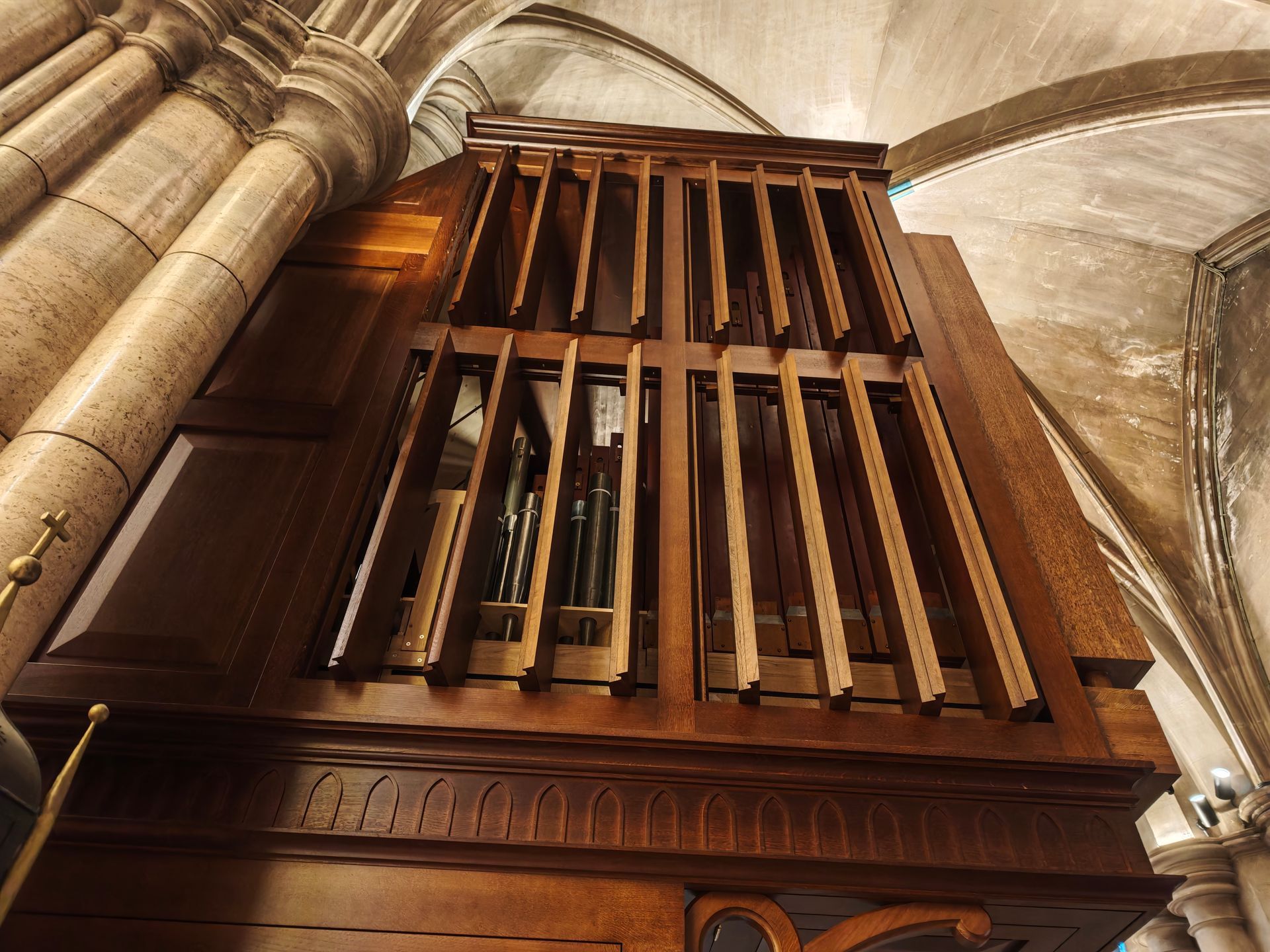
Above, views of the cases and pipework of the Nave Division
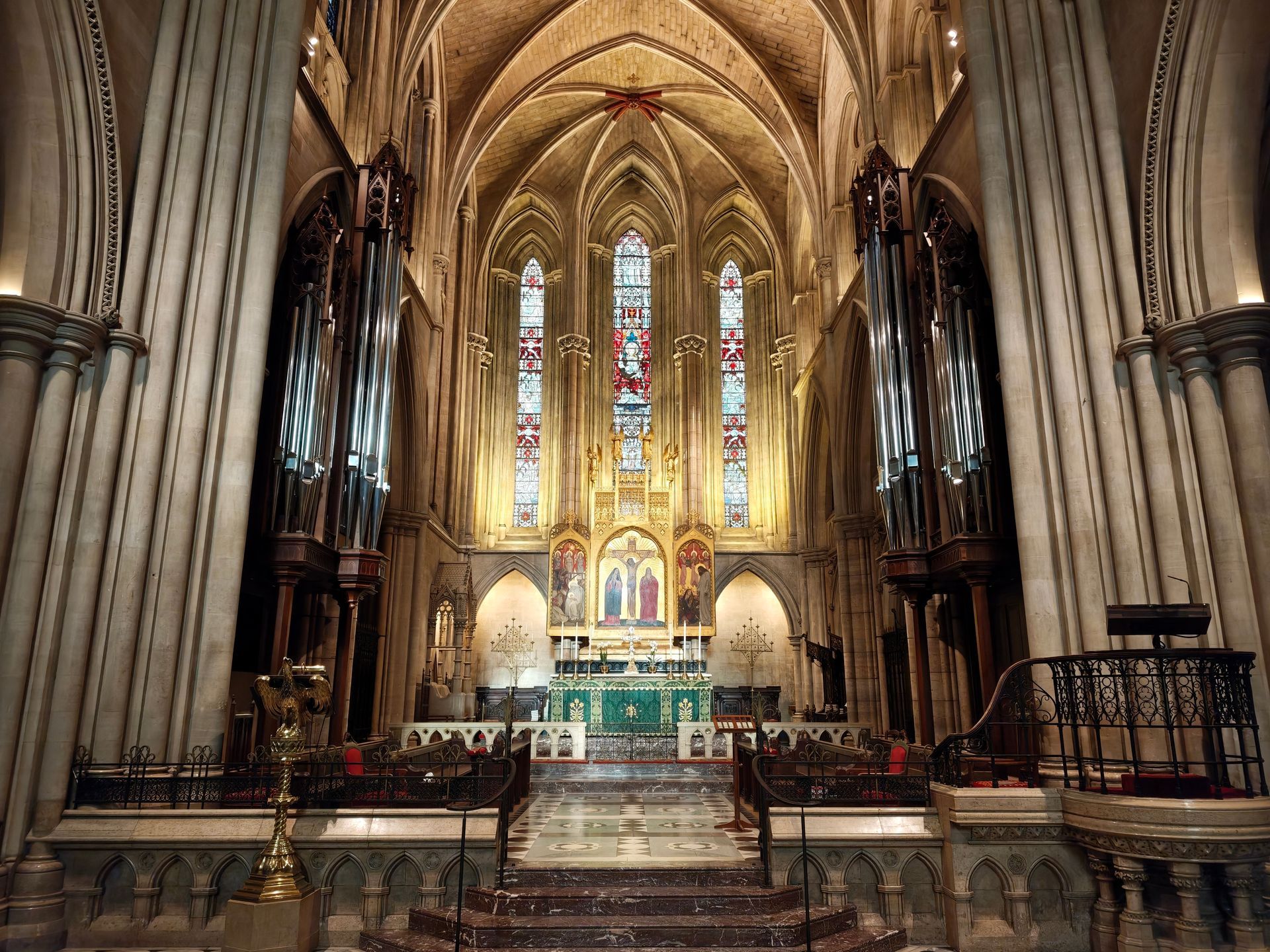
Views of the Chancel Positif Expressif and Grand Organ sections, and their pipework.


Below, you will find videos recorded by Andrew Dewar, the organist, and by George Throup, also musician at the American Cathedral in Paris

Andrew Dewar plays

- Charles-Marie Widor - Marche, from Symphony No. 3

- Louis Vierne - Scherzo, from Symphony No. 2

- Maurice Duruflé - Prélude et fugue sur le nom d’Alain, Op. 7

- Franz Schmidt - Toccata

- César Franck - Prière

- Jonathan Dove - The Dancing Pipes

- Sigfrid Karg-Elert - Marche Pontificale, from Triptych


George Throup plays Le Jardin Féerique, from Ma Mère l'Oye, by Maurice Ravel


Andrew Dewar plays 14 Interludes in different keys by Sigfrid Karg-Elert
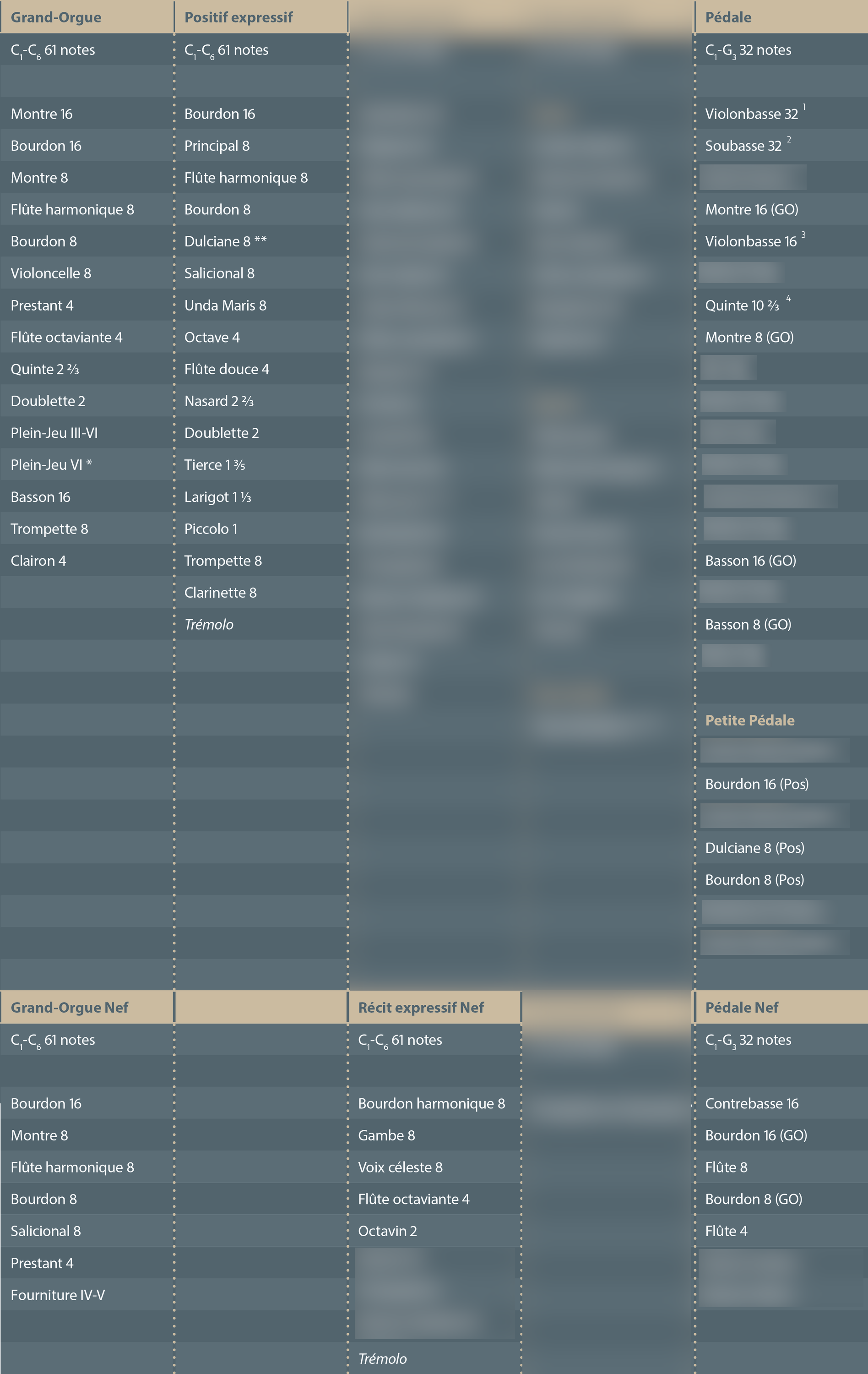
The organ is still awaiting the return of its grand Récit expressif (largely by Cavaillé-Coll), its (new) double Solo — expanded and completed based on the concept of Convers' works — as well as the Grande Pedale.

The diagram above shows the instrument’s current specifications.

Four Grande Pedal stops that have not yet been reinstalled are temporarily playing different combinations on the 16’ Bourdon of the Positif expressif, to compensate for the virtual absence of actual pedal stops in the Chancel


Notes:

*: transforming the progressive, Cavaillé-Coll like Plein-Jeu III-VI into a Plein-Jeu VI.

**: stop placed outside the swell box, unenclosed, partially in the façade

1: currently Théorbe III in 32’ (6’ 2/5, 4’ 4/7, 3’ 5/9)

2: first 12 notes by Resultant on the Bourdon 16’ GO and Positif, then Bourdon 16’ Positif one octave down

3: currently Théorbe III in 16' (3' 1/5, 2' 2/7, 1' 7/9)

4: 10 2/3 from the 16' Bourdon of the Positif


The full specification is available on the project page by clicking here.


This major milestone provides an opportunity to come together and get a first glimpse of this part of the instrument during a grand Thanksgiving concert to mark the 140th anniversary of the consecration of the American Cathedral in November 1886.


On Wednesday 25 November 2026, come and hear the organ played by Andrew Dewar, accompanied by the Chœur Lumière conducted by George Throup, with William Fielding on the piano and Valerie Kirby-Ashmore on the violin.


Free concert; a collection will be taken at the exit to benefit the grand organ reconstruction.
For information and bookings (strongly recommended), visit the American Cathedral in Paris website (click on the coloured text).

19 octobre 2026
À la fin du mois d'août, nous avons achevé la première moitié de la reconstruction de l'orgue Cavaillé-Coll de la Cathédrale Américaine de Paris.
7 octobre 2026
Un des rares témoins du facteur Claude Parisot va profiter d'une cure de jouvence !
29 septembre 2026
Rejoignez la Manufacture d'orgues Thomas à Clervaux ! Nous cherchons des facteurs d'orgues & ébénistes passionnés par l'artisanat et la musique.
16 juillet 2026
Suivez la restauration de l'orgue néoclassique de la Cathédrale de Soissons, endommagé par la tempête Egon. Ce travail sera réalisé avec la Scop Quoirin.
2 juillet 2026
L'orgue de l'église Saint-Pierre de Virginal (Belgique - Commune d'Ittre - Brabant Wallon)
1 juin 2026
Cette 5ème édition du Festival d'orgue de Spa vous propose 3 concerts exceptionnels.
5 février 2026
Un avant-goût du renouveau organistique de la Cathédrale américaine de Paris
7 janvier 2026
En cette nouvelle année 2026, l’équipe de la Manufacture d’orgues Thomas vous adresse ses vœux les plus chaleureux et vous remercie pour la confiance et la fidélité témoignées en 2025, sources inépuisables de motivation au quotidien. Au plaisir de vous accompagner dans vos futures aventures musicales ! Am Ufank vum Joer 2026 wëllt d‘ganz Equipe vun der Manufacture d‘orgues Thomas Iech séng härzlech Wënsch ausdrécken. Mir soen Iech Merci fir Ärt Vertrauen an Är Loyalitéit am Joer 2025 déi Eis Daach fir Daach motivéieren an inspiréiereren. Mir fréen eis, Iech weiderhin bei Ären zukünftechen musikalischen Aventüren ze begleeden. Das Team der Orgelmanufaktur Thomas wünscht Ihnen ein frohes neues Jahr 2026 und bedankt sich für Ihr Vertrauen und Ihre Treue im Jahr 2025, die uns täglich motivieren. Wir freuen uns darauf, Sie bei Ihren zukünftigen musikalischen Abenteuern zu begleiten! As we enter the new year of 2026, the team at Thomas Organ Manufactory would like to extend their warmest wishes to you and thank you for your trust and loyalty in 2025, which are an endless source of motivation for us every day. We look forward to accompanying you on your future musical adventures! Het team van Manufacture d'orgues Thomas wenst u een voorspoedig nieuwjaar 2026 en bedankt u voor uw vertrouwen en loyaliteit in 2025, die ons dagelijks inspireren. Wij kijken ernaar uit om u te begeleiden bij uw toekomstige muzikale avonturen! Dominique – André – Samuel – Laurent Jean-Daniel – Antoine – Hugo Noël – Anthony – Pierre-Yves – Juan Carlos
10 septembre 2025
Version française : cliquer ici. Work on the restoration, reconstruction, and reorganization of the organ at Holy Trinity American Cathedral is going forward! For the record, this instrument was built by Aristide Cavaillé-Coll (Opus 613) and inaugurated by Alexandre Guilmant on October 5, 1887. It was rebuilt in 1921 by Charles Mutin, who enlarged and electrified it while retaining Cavaillé-Coll's pipework, and it was enlarged again in 1930 by Auguste Convers, once again retaining Cavaillé-Coll's sound elements. He added a fifth expressive and powerful “Solo” division with five stops, including two reed stops built by Henry Willis III, the famous British organ builder: a Tuba 8 and a French Horn 8. The range of the keyboards was increased to 61 notes, with real upper octaves (73 notes) for the Positive, Récit, and Solo. The Great reeds were placed under expression. The whole system operated on an electro-pneumatic action, with Pitman windchests. In 1972, a new console, built by Beuchet-Debierre, was installed to control both the Great Organ and the new Erwin Müller organ, installed under the west window of the Cathedral in 1967 (with dual transmission and a mechanical console in the gallery), which had 18 stops (26 ranks). In 1993, Bernard Dargassies made further modifications to the instrument, put the Solo back in action and replaced Müller's instrument in the west gallery with an 11 real stops organ (17 stops and 21 ranks) with exclusively electric transmission, playable from a small mobile console and from the main console. More about the Cathedral's former organ on the Cathedral's website
10 septembre 2025
English version : click here Les travaux du chantier de restauration, reconstruction et réorganisation de l'orgue de la Cathédrale Américaine de la Sainte-Trinité avancent à grands pas ! Pour rappel historique, cet instrument a été construit par Aristide Cavaillé-Coll (Opus 613), et inauguré par Alexandre Guilmant le 5 octobre 1887. Remanié en 1921 par Charles Mutin qui l'a agrandi et électrifié tout en conservant la tuyauterie de Cavaillé-Coll, il est de nouveau agrandi en 1930 par Auguste Convers, conservant une fois de plus les éléments sonores de Cavaillé-Coll. Il ajoute un 5ème plan sonore de « Solo » expressif et à forte pression avec 5 registres dont 2 jeux d'anches construits par Henry Willis III, célèbre facteur brittanique : un Tuba 8 et un French Horn 8. L'étendue des claviers passe à 61 notes aux claviers, avec octaves aigues réelles (73 notes) pour le Positif, Récit et Solo. Les anches du GO sont mises sous expression. Le tout fonctionne sur une traction électropneumatique, avec sommiers « Pitman ». En 1972, une nouvelle console, construite par Beuchet-Debierre est installée afin de pouvoir y contrôler le grand orgue ainsi que le nouvel orgue Erwin Müller, installé sous la verrière ouest de la Cathédrale en 1967 (à transmission double, avec une console mécanique en tribune), qui comprenait 18 jeux (26 rangs). En 1993, Bernard Dargassies apporte de nouvelles modifications à l'instrument, remet en service le Solo et remplace l'instrument de Müller sur la tribune occidentale par un orgue de 11 jeux (17 registres et 21 rangs) à transmission exclusivement électrique, jouable depuis une petite console mobile et depuis la grande console. Plus d'informations sur l'ancien orgue sur le site de la Cathédrale Américaine
Plus de posts